
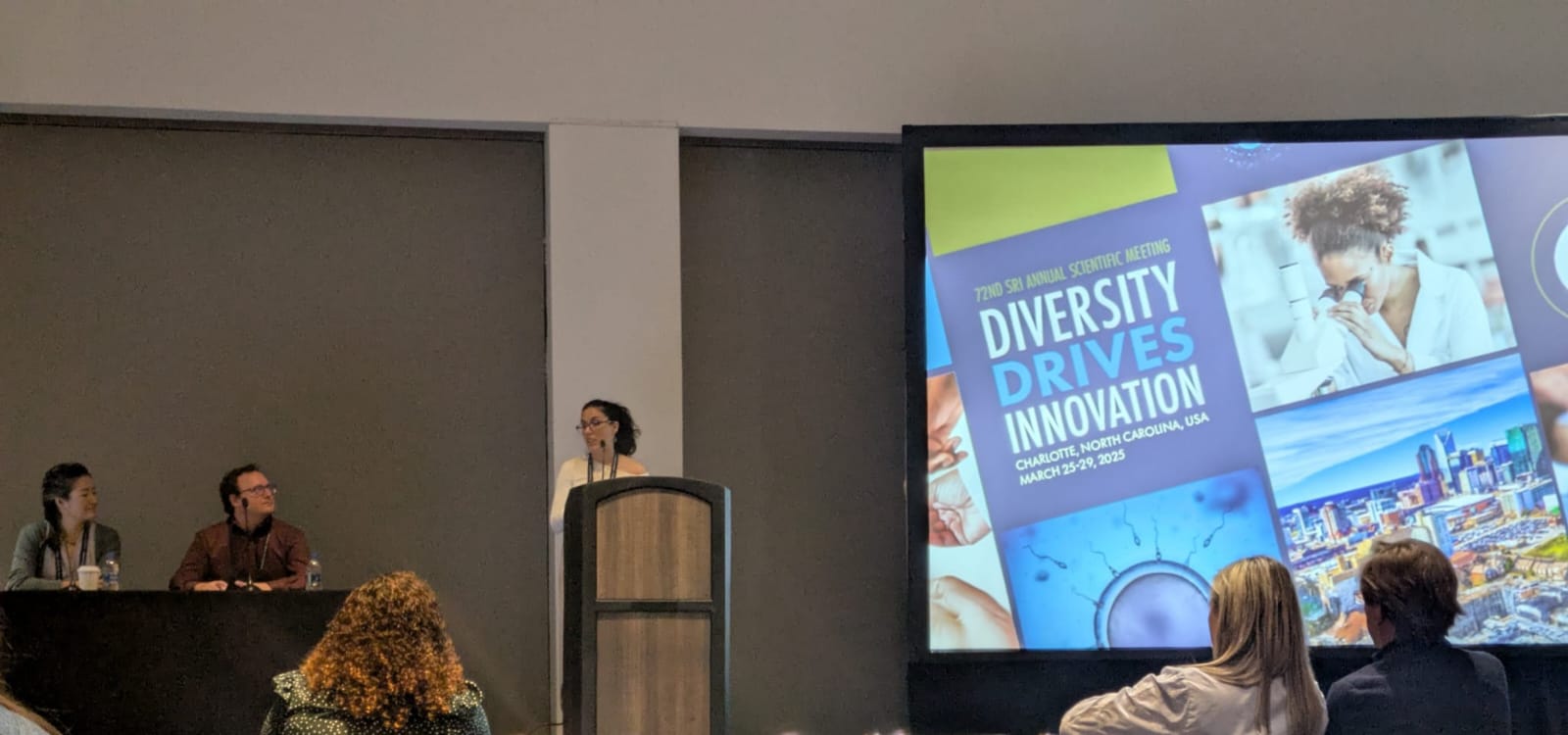
iPremom successfully presented its latest research at the 72nd Annual Scientific Meeting of the Society for Reproductive Investigation (SRI) 2025, held from March 25-29, 2025, at the Charlotte Convention Center in Charlotte, North Carolina, USA.
This prestigious international event brought together leading researchers, clinicians, and industry experts to discuss the latest breakthroughs in reproductive science. As part of our commitment to advancing maternal and fetal health, our team presented innovative research on plasma cell-free RNA (cfRNA) as a predictive biomarker for early-onset preeclampsia (EOPE).
Early Detection of Preeclampsia: Key Findings
Preeclampsia remains a major pregnancy complication, with current diagnostic methods detecting it only in later stages of gestation. Our study, part of the PREMOM (NCT04990141) project, explored a cfRNA-based predictive model capable of detecting EOPE up to four months before symptoms appear.
Conducted across 14 tertiary hospitals in Spain, the study recruited 9,586 pregnant women and analyzed cfRNA from first-trimester blood samples of 42 EOPE cases and 131 matched normotensive controls. Using machine learning and deep learning algorithms, we identified 36 key cfRNA transcripts linked to decidualization resistance (DR)—a critical factor in preeclampsia.
Our predictive model demonstrated:
✅ 83% sensitivity, 90% specificity, and an 88% AUC, outperforming current diagnostic approaches.
✅ A non-invasive, first-trimester test, reducing reliance on clinical parameters.
✅ A maternal cfRNA signature, reinforcing the maternal contribution to EOPE development.
These findings highlight cfRNA’s potential as a reliable early biomarker for preeclampsia, opening new possibilities for personalized pregnancy monitoring and earlier interventions.
Successful Participation at SRI 2025
Our team had an enriching experience at SRI 2025, sharing these innovative findings, engaging with fellow experts, and discussing how cfRNA-based diagnostics can transform the future of maternal health. We look forward to continuing our work in this field and applying these insights to future innovations.



