
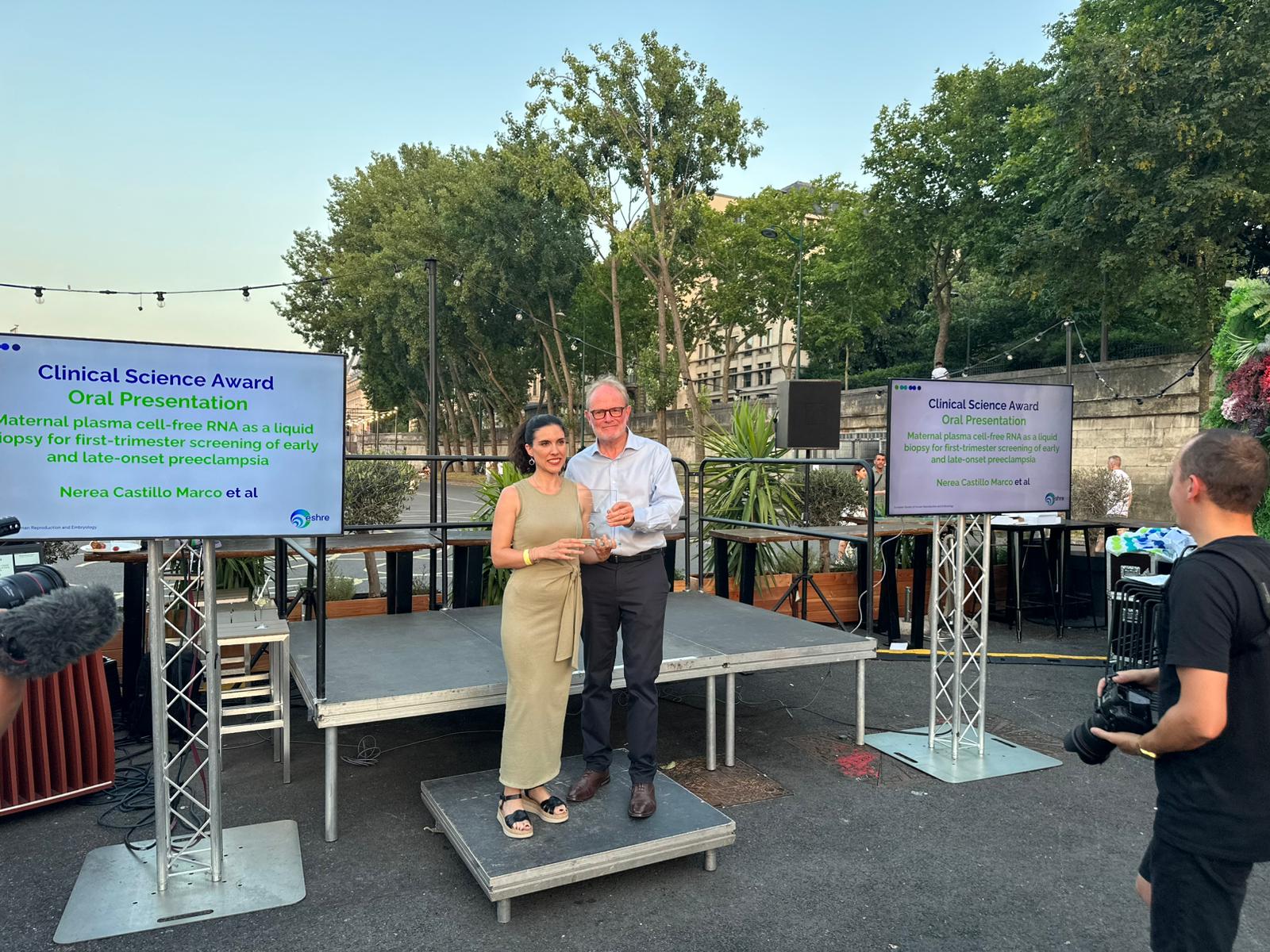
iPremom has been awarded the prestigious Clinical Science Award for Oral Presentation at the Annual Meeting of the European Society of Human Reproduction and Embryology (ESHRE), held in Paris. The recognition was granted for the study titled “Maternal plasma cell-free RNA as a liquid biopsy for first-trimester screening of early and late-onset preeclampsia”, led by Dr. Tamara Garrido Gómez, iPremom’s Scientific Director, with Dr. Nerea Castillo Marco as first author.
The award highlights the groundbreaking potential of the MaiRa Preeclampsia Test, a non-invasive blood test based on cell-free RNA (cfRNA) analysis that accurately anticipates the risk of preeclampsia as early as the first trimester—up to five months before symptoms appear.
A milestone in maternal-fetal medicine
The study involved over 9,600 pregnant women across 14 Spanish hospitals. Using artificial intelligence, the team developed a predictive model that correctly identified 83% of women who would later develop early-onset preeclampsia, while accurately ruling out 90% of those who would not. With an impressive AUC score of 0.88, the test sets a new standard in early risk stratification and pregnancy monitoring.
“For the first time, a routine first-trimester blood sample can provide an early warning for preeclampsia with high accuracy, long before symptoms appear. This is a true game-changer in maternal healthcare,” says Dr. Nerea Castillo Marco.
The study also uncovered distinct molecular signatures for early-onset and late-onset preeclampsia, underscoring the need for differentiated clinical strategies tailored to each condition.
Next steps: Clinical implementation
With validation and regulatory processes underway, the MaiRa Test is expected to become available in clinical practice starting in 2026. Its integration into prenatal care could revolutionize how high-risk pregnancies are identified and managed, significantly improving outcomes for mothers and babies alike.
This award not only recognizes the scientific excellence of iPremom’s research team, but also reinforces our core mission: to make pregnancy safer for all women.
We thank the iPremom team, our collaborators, and everyone who has supported us on this journey toward earlier, more precise, and more humane prenatal care.



